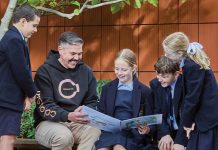
One of the joys of working with younger children, Caroline Beilby, Head of Junior Primary at Grimwade House says, is their openness and curiosity.
“They have not yet formed fixed ideas about what they are “good” or “not so good” at,” she says.
“Instead, they approach learning with enthusiasm, a willingness to try new things, and even delight in mistakes that lead to new understanding.”
Between school commencement in Prep and the move to Upper Primary in Year 3 is a remarkable period of development, laying the foundation for skills and attitudes that students will carry throughout their lives.
Melbourne Grammar School’s purpose is to develop independent young people with the confidence to create their own future and the compassion to make a positive contribution to Australian society and the wider world.
Alongside explicit teaching, which lays the foundations for literacy and numeracy learning, the Junior Primary program at Grimwade House has been intentionally designed to encourage imagination, creativity, and curiosity. These experiences, Ms Beilby says, help foster a genuine love of learning.
“When children feel comfortable, confident, and connected to their school, teachers, and peers, they are far better positioned to embrace all that school life offers,” Ms Beilby says.
“They benefit from repeated opportunities to practise, and from access to a wide range of materials
that invite exploration, experimentation, and discovery.”
Before preferred learning styles become firmly established, Ms Beilby says younger students tend to thrive when learning is presented in varied and engaging ways – hands‑on, aural, visual, and everything in between.
When Year 3 student Simon was in Junior Primary last year, he featured in the School’s Purpose video, showing him creating greeting cards to accompany food and toy hampers for the Port Phillip Community Group. Participating in age and stage-appropriate opportunities like this to engage with the world around our Junior Primary students builds empathy and confidence, and demonstrates the broader impact of their learning.
Ms Beilby says that physical environment in which young students learn also plays a vital role in development.
Teachers put significant thought into how they design their spaces; creating intentional areas that complement and enhance learning outcomes.
Consistent routines and expectations, whether students are in the classroom or outside in nature, also help build strong learning behaviours that support their growth.
Families, too, play an important part in developing foundational skills in young learners.
“We encourage parents to support their children in taking thoughtful risks, viewing mistakes as positive opportunities, and allowing space for children to work through challenges before stepping in,” Ms Beilby says.
“Our aim is to nurture students who are confident risk‑takers and creative problem‑solvers – young learners who can apply their initiative across a variety of settings both in school and beyond.”