From the dodo to the woolly mammoth, questions about extinction and whether lost species could ever return to life captured the imagination of Grimwade House students as they explored one of Australia’s most iconic extinct animals, the Thylacine (Tasmanian tiger).
“Students became fascinated by the Thylacine, also known as the Tasmanian tiger, because its extinction is relatively recent,” says Grimwade House teacher Ms Maree Kardis.
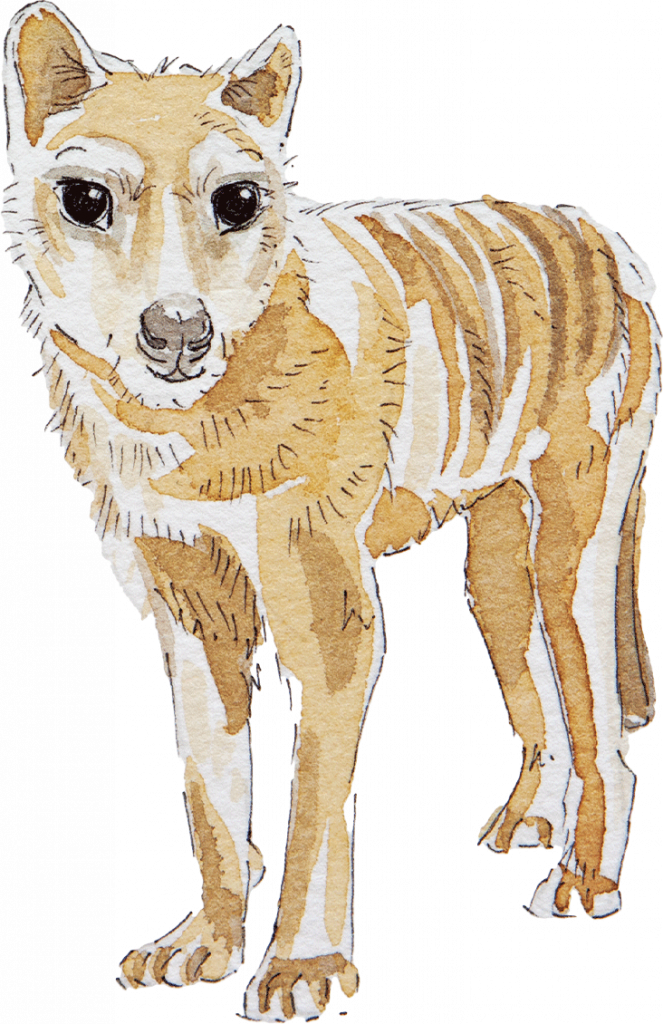
“It is also directly linked to human interventions through government bounties, as well as pressures on their habitat.
“This led to rich classroom discussions about environmental responsibility, apex predators, and the long-term effects humans can have on the environment.”
Building on this curiosity, Ms Kardis’ students worked collaboratively to deepen their understanding of the Thylacine by writing and illustrating a book about its extinction. Their project incorporated research into Professor Andrew Pask’s work at the Thylacine Integrated Genomic Restoration Research Lab at the University of Melbourne, as well as his role as Chief Biology Officer at a United States de-extinction company.
“Once the book was finished, we sent it to Professor Pask, which gave students the sense that their learning could extend beyond the classroom and actually contribute to real world conversations about science and conservation,” Ms Kardis says.
“The collaborative process of creating the book gave students a strong sense of ownership and pride.”
The Thylacine project not only introduced students to cutting edge de-extinction science, it also deepened their understanding of biodiversity and the importance of maintaining healthy ecosystems.
“Biodiversity is important because it acts like an ecosystem’s immune system and provides critical resources,” explains Year 4 student Eva.
“Biodiversity makes sure all living things in our ecosystem stay connected and balanced,” adds Xristos, also in Year 4.
“Seeing how nature interacts is fascinating and makes me want to understand more about it.”
With Professor Pask’s visit to the school, students heard first-hand about the work of scientists and discovered that everyone can contribute to scientific conversations in meaningful ways.
“The experience has created a sense of excitement, wonder, and possibility that has continued well beyond the completion of the project itself,” Ms Kardis says.
“It’s important that students see themselves not simply as learners, but as future contributors to important conversations and solutions for our society.”