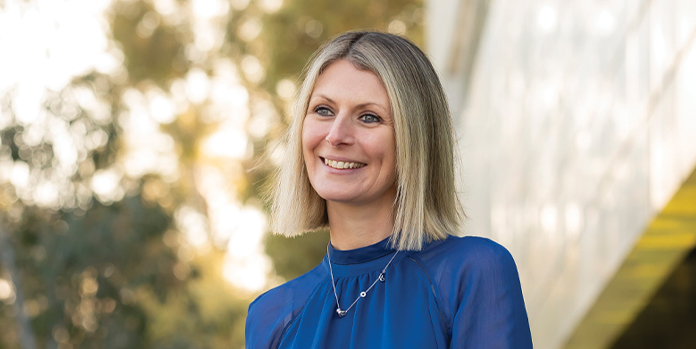
Advocating for a safer digital world
What causes someone to commit a crime?
When Professor Asher Flynn (OM 2001) was first introduced to the discipline of criminology at school, she learnt very quickly that it’s not as simple as “people being bad”.
“My teacher at the time spoke a lot about how things are very rarely black and white; there’s a lot of nuance to what’s going on,” she recalls.
“It really challenged the way I thought about crime and about people.”
Today, Asher is the Vice-Chancellor’s Distinguished Professor of Criminology in the School of Social Sciences at Monash University, working as a leading voice in policy and prevention concerning gendered and sexual violence, with a focus on technology-facilitated abuse.
Asher started looking into the problem of image-based sexual abuse – the non-consensual sharing of intimate images – during the mid-2010s, well before the rise of AI-generated imagery.
Back then, the idea of using cameras and phones in this way was relatively new,” Asher says.
“Today, the technological advances around AI are happening so quickly, and anyone can access the tools.”
Asher says that to keep pace with the rate of change, we need to find innovative ways to regulate the area. But with a legal background, Asher acknowledges the challenge in writing law around the topic, as “it has to be specific, but there also has to be room for interpretation”.
In every sense, research is an important part of the puzzle.
“The main thing, from my perspective, is that researchers need to stay in the conversation,” she says.
“We have to be in the room, at the table, to be able to contribute.
“If all we do is critique from a distance, we’re not going to have the chance to shape any type of meaningful change.”
Asher’s current research project is aimed at better understanding the drivers of deepfake abuse.
Her team has collected data from victim-survivors, perpetrators, and bystanders across Australia, the United States, and the United Kingdom, to create a detailed picture of the harm taking place and the tools being used.
“Our ultimate aim is to build the evidence base we need to advise on the kinds of regulation, prevention, and education responses we need,” she says.
As part of building a nuanced response, Asher’s team is also mapping out the characteristics of those who perpetrate technology-facilitated violence.
“By understanding the different types of people who engage in these behaviours, we’ll be better able to create tailored prevention methods and responses,” she explains.
“Hopefully, that can be translated into the kind of respectful relationship conversations we have in schools. By having these conversations at an early stage, and in a safe way, we’ll be able to have a meaningful impact before harm takes place.”
Last year, Asher and two of her colleagues published Image-based sexual abuse and bystander intervention: A mixed methods study of attitudes, barriers and facilitators (2025), which focuses on safe interventions people can make in everyday conversations to shift attitudes from the start.
“There’s a range of things that people can do, but as a starting point it’s about raising awareness about what the harms of this behaviour are,” she says.
In this publication, we were looking at how we can safely provide guidance to people to step in to conversations and say, ‘Hey, that’s not okay’, and use that as an opportunity to shift that broader conversation around harmful gendered and social norms.”
Alongside her research commitments, Asher has been engaged as an advisor for companies such as Meta and Bumble, working to inform their safety and policy teams.
“I’ve found that the people who work in these spaces, while they’re doing an extremely challenging job, are very open to conversations about how things could be improved and what might pose a risk to users,” she says.
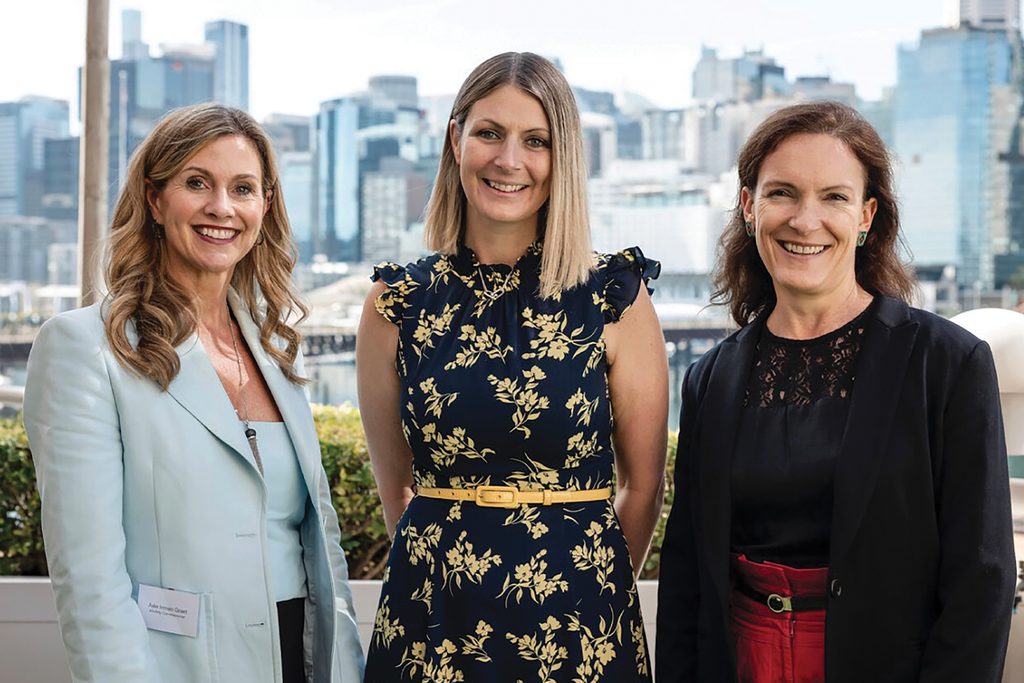
She speaks to Meta’s introduction of different types of ‘disruptors’ that make it more difficult to send inappropriate images or post statements that would be classified as hate speech. Some AI platforms are also starting to input watermark-type information into their generated images, so that it can be verified when something is fake.
“There are some really amazing resources out there, both for young people and for parents as well,” Asher says.
“The eSafety Commissioner website has a huge range of resources specific to things like deepfake abuse, as well as image-based sexual abuse and other forms of like online violence and harms, that talk you through different ways that you can have conversations about it, but also what you can do when it’s happening.”
While Asher says these tools are a positive start, the real challenge is to keep up with the rapid advances of technology.
“That’s why I believe we need to continue to be in the room with these companies, having the hard conversations,” she says.
“I want to see a world where we can all engage safely online, and where we can all be responsible digital citizens.”