To have the courage to pioneer an invention; an advancement that will change the course of medical history, requires a certain type of resilience.
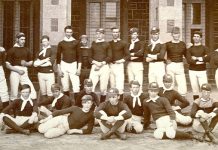
Dr Mark Cowley Lidwill’s (OM 1895) early, determined days as a schoolboy rower at Melbourne Grammar School were captured in The Melburnian (1894);
“Lidwill is raw and clumsy at present, but, very willing and improving,” it reads.
“He possesses many faults, but has at present chiefly to remember to catch sharply with straight arms and get his shoulders on to the beginning.”
Mark didn’t pursue his rowing beyond School; his path rather led to the a very different set of achievements, including the invention of the cardiac pacemaker.
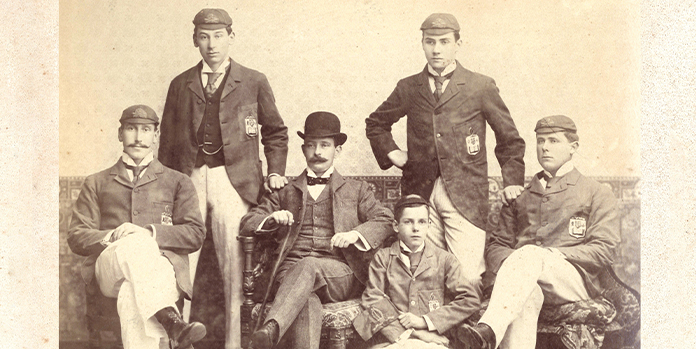
Mark was born in England, and migrated to Melbourne in 1894. He spent his last two years of his schooling at Melbourne Grammar, where he was a member of the Library Committee, participated in drama, and competed in swimming, tennis, and rowing.
From Mark’s admission to study medicine at the University of Melbourne, one can assume strong academic performance alongside his cocurricular endeavours during his time at the School.
After competing his undergraduate studies, he went on to gain his Doctor of Medicine at the University of Sydney.
His practice and research in the space of anaesthesia led him to the invention of the ‘Lidwill Inter-tracheal Anaesthetic Machine’, or ‘Lidwill Machine’, which was a portable machine used in hospitals across Australia to deliver mechanical anaesthesia.
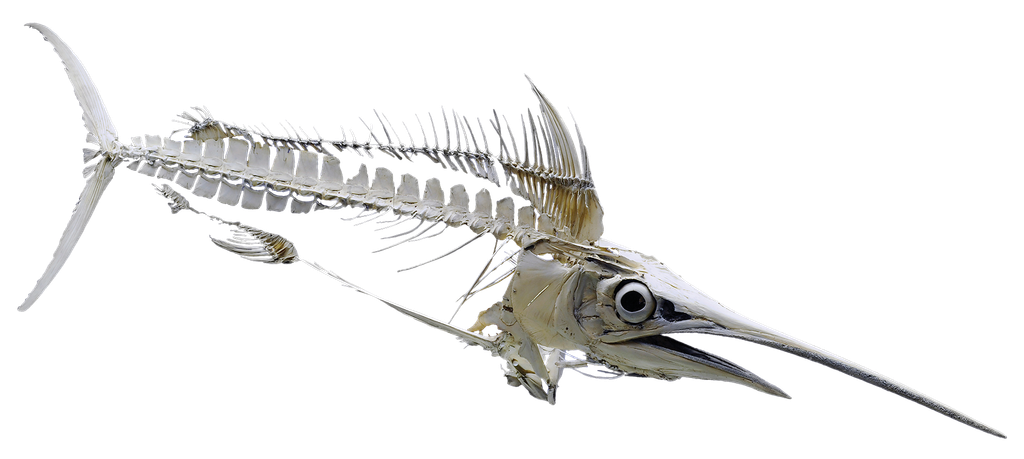
Photographer: James King © Australian Museum
Around the same time, Mark pioneered another feat as an avid fisherman. He is recorded as having made the first verified recreational capture of a marlin on rod and reel in Australian waters in 1913; a black marlin weighing in at 70lbs (32kg) off the coast of Port Stephens.
Mark designed and crafted much of his own fishing equipment, including a timber motor cruiser which was used to secure said catch. The fish was donated to the Australian Museum, and its skeleton is still on display today.
Back on land, Mark continued his pursuit of medical advancement, delving deeper into his interest in the cardiac causes of death.
With an understanding that the cardiac muscle would contract with intracardiac adrenaline or electrical stimulation, he began designing an electrical device “with the objective of resuscitating patients in whom the conducting system had failed”.
He teamed up with physicist Edgar Harold Booth at the University of Sydney to design a machine to resuscitate and pace the heart. The pacemaker device they eventually constructed could range from roughly 80 – 120 pulses per minute.
By 1926, Mark oversaw the first successful pacing of the heart using an insulated needle, resuscitating a newborn baby and changing the
course of medical history.
His achievement was reported on by The Sydney Morning Herald: “A remarkable electrical device to stimulate the action of the heart after
a person has been dead, or supposed to be dead, for several minutes was one of the subjects of discussion,” it read.
“The instrument was perfected by Dr Lidwill, the prominent Sydney heart specialist.
“By its aid a stillborn child was brought to life at a Sydney materity hospital after stimulation by the machine for abut 15 minutes.”
Before retirement, Mark was recognised with an Honorary Fellowship from the Faculty of Anaesthetists of the Royal Australasian College of Surgeons.