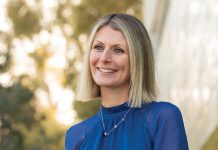
Josephine (Jo) Wright (OM 1997) always knew she wanted to be a filmmaker, but her love of science almost drew her career in an entirely different direction.
“I loved writing, I loved telling stories, but what I really loved – really absolutely loved – was science,” she says.
Jo started her education as a third-generation Melbourne Grammar student at Grimwade House; a period of her life that she says taught her independence and confidence.
After graduating from Melbourne Girls Grammar, Jo pursued her dual interests with a Bachelor of Arts and Bachelor of Science at the University of Melbourne. After much deliberation, she decided to pursue a postgraduate Diploma of Film and Television at the Victorian College of the Arts.
On this path, she found her passion at the intersection of her two “loves” – in creating natural history documentaries.
One of Jo’s first projects was as a production coordinator on a six-part documentary about the Little Penguins on Phillip Island, called Penguin Island. To create the series, Jo and the crew lived with the scientists and researchers “on and off” for over a year.
“I remember being beside the penguin burrows, waiting and waiting for eggs to hatch, because we just had to capture that moment that the chicks come out of their eggs,” she recalls.
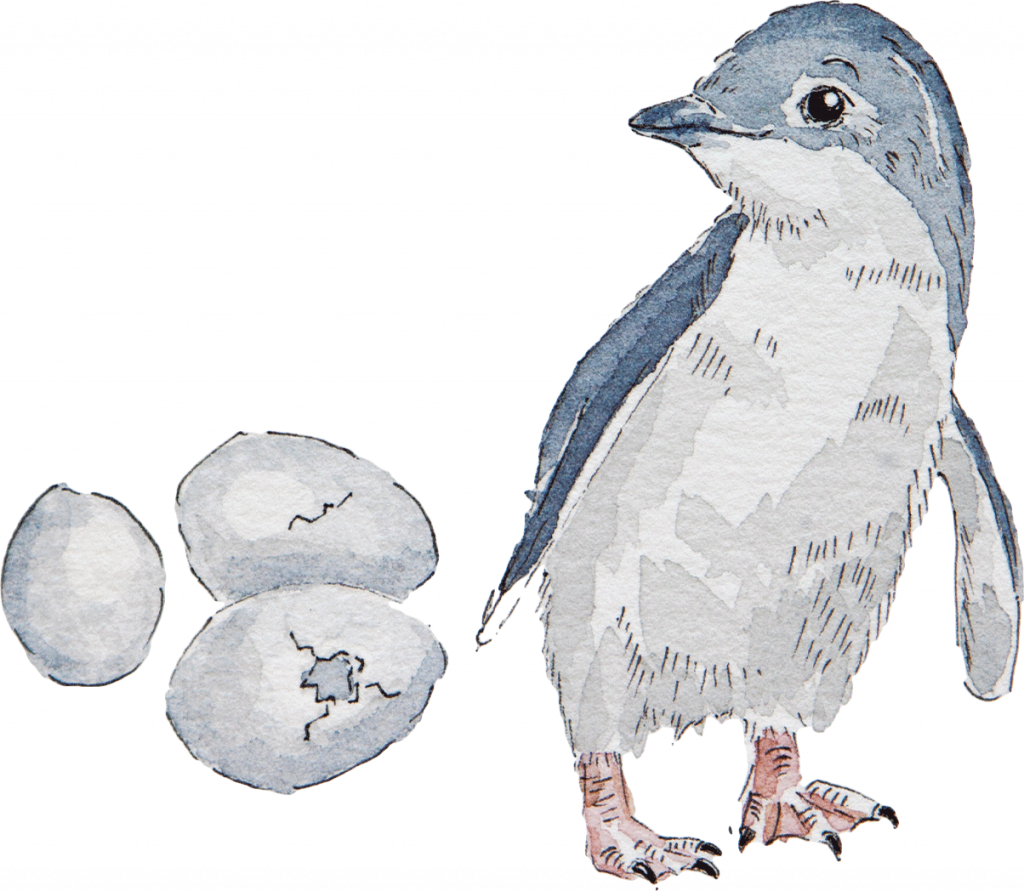
Despite having a day crew and a night crew to watch over the eggs, “every time the cinematographer went off and had a break, it would happen.”
While they eventually “got the shot”, when it comes to documentary making in the field, Jo says “you’ve got to be a bit of a problem solver.”
“It might be that your gear hasn’t arrived, or it might be that the animal that you’re filming just won’t appear at the time.
“You go in with a bit of a preconceived idea of what might happen, but then often what happens on the day is not what you thought, however, often can be even better.”
In her early 30s, Jo had the opportunity to produce a half-hour ABC documentary special called Queen of the Desert. The documentary followed Starlady, a social worker who worked in central Australia. The film was selected to screen at over 30 film festivals around the world, winning numerous awards including an Award of Excellence at the 2014 Canada International Film Festival.
From there, Jo worked on a mix of natural history projects, including Devil Island (about the declining Tasmanian devil population), Possum Wars (about “Australia’s most unwanted marsupial” living in urban cities), and Kangaroo Mob (about a mob of kangaroos “causing havoc” in Canberra), before making the move to Genepool Productions to work specifically on science documentaries.
It was here that her scientific background was really able to shine. Being able to talk to scientists and researchers in their language, then translate that information into something the general public would not only understand, but be interested in, was crucial to her role.
“There’s a huge amount of research involved, and you’ve got to make sure that you’re backing up each statement that you make with facts,” she says.
She recalls working on a program on floods that was commissioned by National Geographic Television. For every piece of information shared, they were required to back it up with three scientific citations.
“We always worked with researchers and scientists, and had consultants who were leaders in their field on the projects looking at the scripts.”
Typically, Jo says, around Year 10 Science is the level of assumed knowledge for general population scientific content. To communicate complex scientific information, Jo recalls the joy of using out-of-the box, creative thinking and problem solving.
“In Uranium: Twisting the Dragon’s Tail, we used a pool table to tell one of the scientific sequences about atoms and different protons and neutrons.
“We also used Dr Derek Muller, a YouTube science communicator as the presenter, to reach a younger audience.”
Part of documentary filmmaking that Jo appreciates the most is the privilege of going “behind the scenes” into places and people’s lives.
As a field and line producer for the SBS/PBS series, Jo travelled into the exclusion zones around Chernobyl and Fukushima, an experience Jo says was “incredible”.
“When we were in Fukushima, we met a family that had been displaced and visited their house left exactly the way it was.
“I think it’s just such an honour to be able to help tell stories in this way,”
she says.
After working on over 30 hours of documentaries for various broadcasters including BBC, National Geographic, SBS, PBS, ABC and Arte, Jo is now based in Woodend, working in communications and advocacy for a local not-for-profit that specialises in youth mental health and suicide prevention for regional and rural communities.
“Being able to reach such a large audience, and help to tell stories that make an impact or make you think; that’s really special.”